
Return a Borrowed Dream
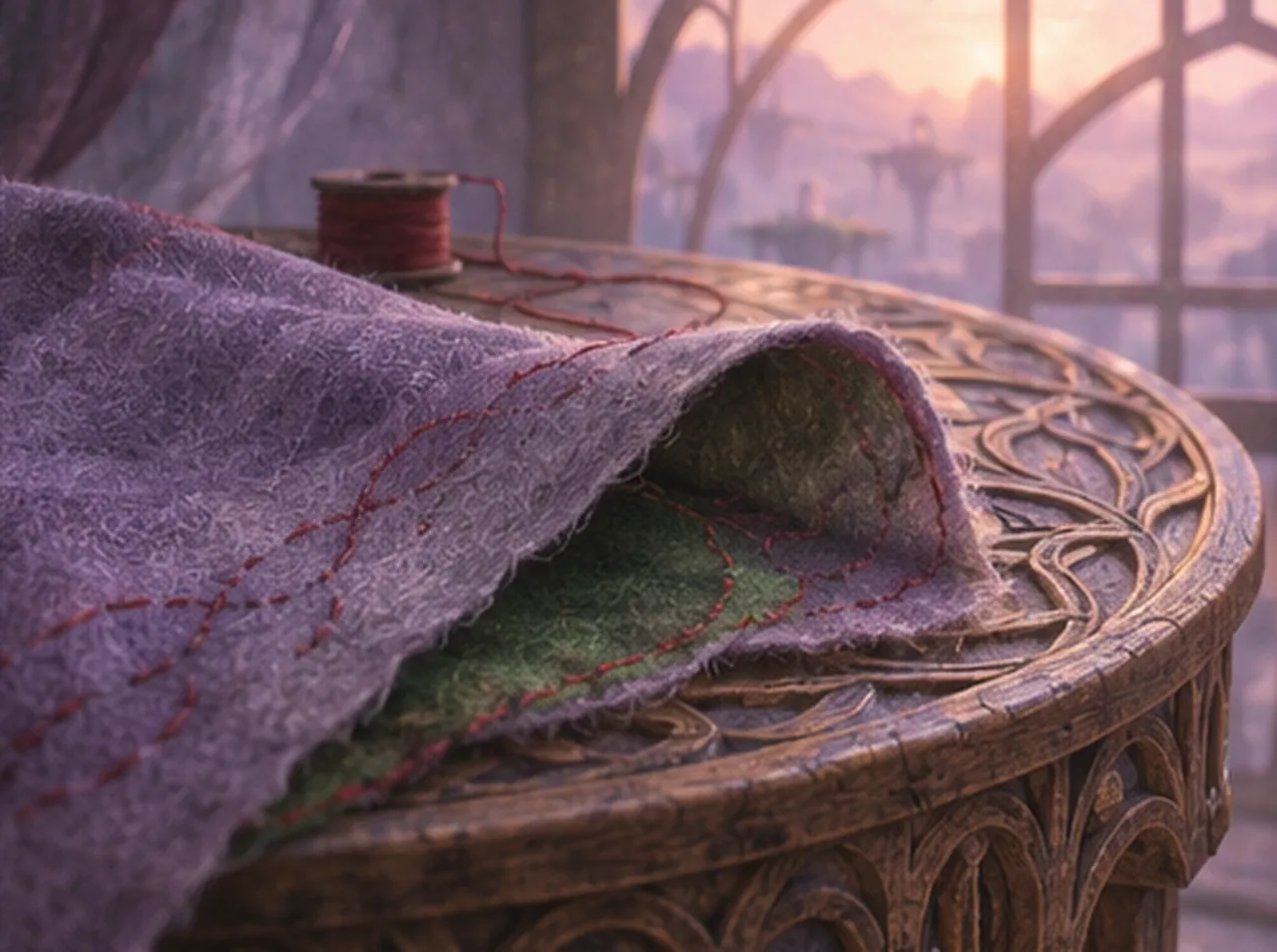
A traveler reaches the other side of an invented passage and steps away from the last visible thread. Some of the cloth used to make the crossing came from a familiar dream nearer the loom. The rest belongs to the sleeper’s original world. An early test waited for the traveller to pass, then took away all of the bright material at once. The resulting path looked unfamiliar to someone who wanted to find their way back. We gave the maker a smaller return action with room for a second look from either side.
List what the crossing used before touching it again
The brighter part of the path brings two different threads into a knot. A familiar outer line on the near side helps identify which fragment came from an older piece of cloth. Tie Two Dream Threads Gently keeps two separate lines visible after they are joined. The maker can come back to the joined piece from the low side and identify the shorter borrowed point. A part of the path that still belongs to the sleeper can remain in a different position, ready to support a return without needing to end the whole borrowing all at once.
Let the traveller keep a recognizable landing
A little wedge of older seam reaches a quiet place near the passage’s far end. From there a sleeper can still find an earlier edge after the paler light fades. A Color You Can Find Twice concerns how two views can hold onto the same physical detail. This return can leave a shape somebody recognizes near the landing rather than requiring them to track every color that was present on arrival. If the next person wants to come back, give them a chance to choose before taking away the last borrowed strand.
Bring one piece back to a place it remembers
At the loom lay the material next to a frame that once held it. A round shadow from a nearby curtain can show how the piece used to fit in the world from which it was borrowed. The maker sees which part has picked up another fold while supporting the crossing. The Passage Made of Borrowed Sleep makes the original edge identifiable before the first bridge is built. When the material comes back, its new shape can remain as a small record instead of being automatically made the same as before.
View the old passage after the light changes
Make one short return from the loom to the first place where the traveller could stop. There can be a shorter familiar way past the curtain now. See how far the quieter crossing remains visible without its brightest material. If the only available view has gone dark, let one of the old lines keep its earlier direction a little longer. A Fear Along the Hem checks what a repaired edge offers as somebody approaches. The return uses part of that concern even while fixing less of the surroundings.
Record what is still available on both sides
At the end, ask which material returned to the frame and which part remains useful in the older scene. If a player can point to the visible landing as well as the piece that was borrowed, the test gives the return a place in the crossing story. It shows a change without telling a sleeper that they have lost the world they started with. The next short passage can begin from something an earlier traveler would still recognize. The cloth remains useful because it had a way to change carefully and to be given back.
Keep a drawing of both parts on the near side of the loom. During a later pass, the maker can compare the bare landing with the fold now resting in the frame.