
The Edge Where Fear Changes Shape
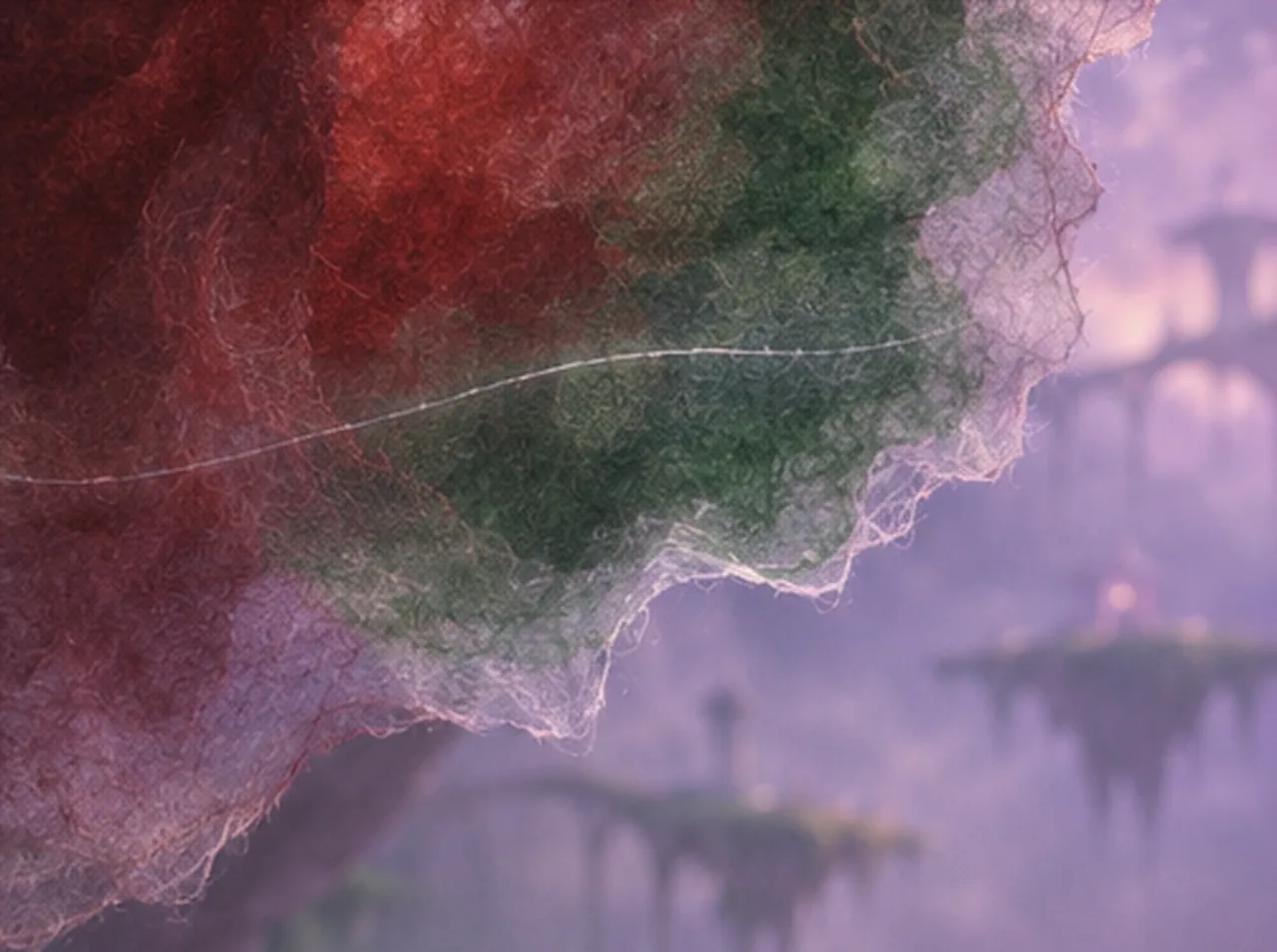
The side of a dream passage hangs just above a busier region. Frayed cloth near the opening starts to move when the region changes its shape. The earlier model treated the whole edge as a moving line. A maker could find some of the original seam and still think it needed to replace the whole surface. We drew a smaller place where an old hem can still be identified. It gives the player a reason to start a repair at a readable point before going farther along the fear.
Draw the hem against an ordinary piece of fabric
Set a dull green strip beside the old canopy and compare the two without changing their lighting. The canopy still has a shorter pale edge. A small tear passes diagonally through it and ends before the material moves farthest inward. A player can place a tentative thread by that stopping point without putting anything into the moving region yet. A Fear Along the Hem follows a repair from that position. Check the original line and see which part of it the traveller would still recognize as a way through the scene.
Let the moving shape keep its own motion
The inside of the fear can open wider and fold inward with no direct change to the nearer seam. Move the viewer until the frayed edges are visible around the same part of the picture. The change can look larger there. The new cloth can stay pinned to the pale seam without stretching all the way across it. A useful test gives a player an ordinary point of contact and time to choose another view. A Color You Can Find Twice uses one part of a material as a reference after a stronger change at the far side. In this trial the recognizability of that piece lets the maker decide where their intervention can end.
Give a passage enough of a shelf to stand on
A thin part of the new material can stretch from the tear to a quieter side. The earlier route still ends at a short bend. Give somebody who approaches from the ground a way to locate both and decide whether to use the added edge. The line of the fold should remain legible from their direction, even if the first repair was made above it. The Passage Made of Borrowed Sleep uses a short course beside an old curtain to keep a familiar starting place. The repaired hem can serve a similar purpose without forcing the person to move all the way past the nearest fear.
Keep a reason to revisit an old mark
After the trial, leave a very small opening beside the pale seam instead of fusing it to every new thread. The maker can return to see which parts became easier to hold and which remain loose beyond the crossing. If the repaired part moves under a later shade, the old end remains a useful reference. Tie Two Dream Threads Gently follows how both a new strand and its earlier direction can remain visible near a join. A player may learn to place their next repair differently after seeing what stayed readable in the old twist.
Let the ending support a real choice
Ask where a traveller can stop to consider the route if they are reluctant to cross immediately. The maker can leave them that space even while the dream moves nearby. A small repaired edge can give another person an option without treating the rest of their fear as a thing the player has to remove. If a short line appears readable from both directions the trial has a useful passage to keep testing. Bring the borrowed material back only after looking at what the original cloth can still show.